The experiential marketing ROI question: What happens after the Instagram post?
As brands invest in immersive activations, product trials and consumer experiences, the challenge is moving beyond visibility to establish what these investments deliver, say industry heads
 by
Published: Oct 26, 2026 8:44 AM | 6 min read
 Follow Us


- Brands are increasingly utilizing experiential marketing strategies, such as interactive installations and large-scale festivals, to enhance product discovery and consumer engagement, exemplified by events like Nykaaland 4.0.
- Significant investments are made in these marketing activations, with costs for booth spaces at Nykaaland reaching up to ₹40 lakh, aimed at generating consumer-generated content and social media visibility.
- Measuring the commercial impact of these experiences remains challenging, as brands often struggle to link consumer interactions at events to actual sales or repeat purchases, leading to a focus on brand awareness and consumer feedback instead.
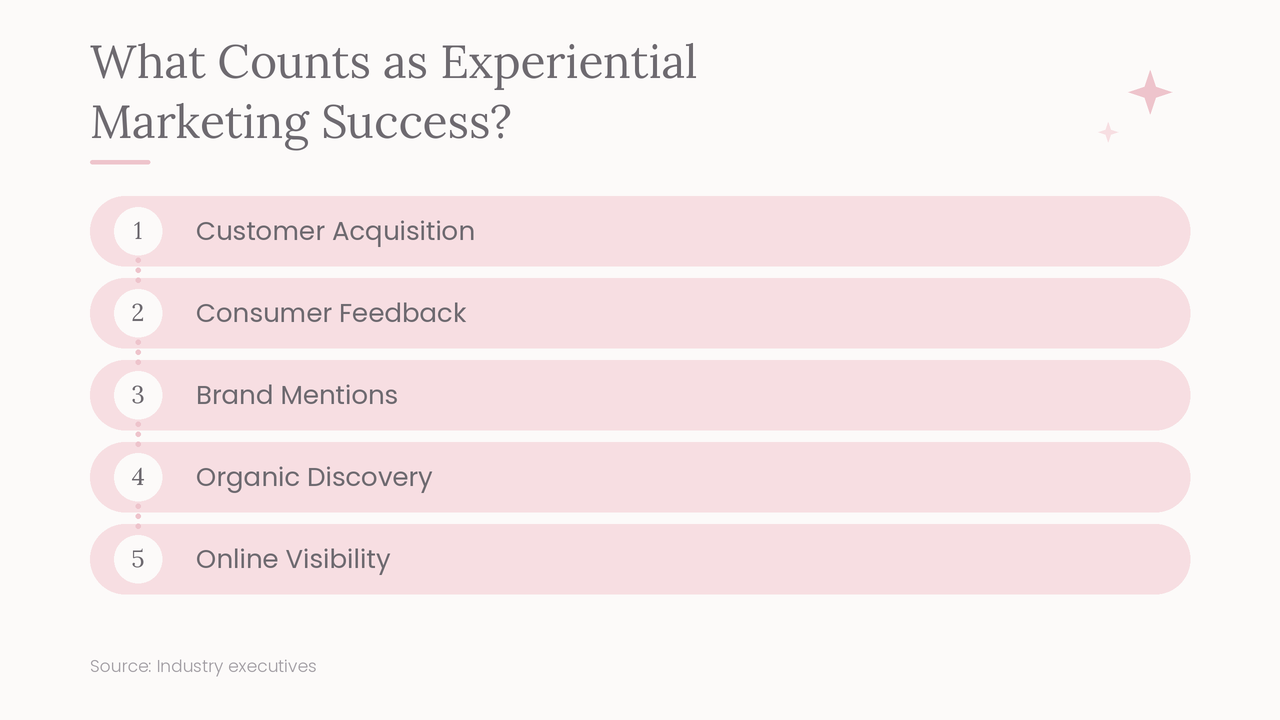
- Executives from various beauty brands emphasize that the success of experiential marketing is gauged through customer acquisition, brand mentions, and online visibility rather than direct return on investment, highlighting the long-term nature of brand-building efforts.
Brands are increasingly going all out to turn product discovery into an experience. It could be an interactive fragrance wall that invites consumers to explore scents, a branded van that brings products directly to the streets, or a cab transformed into a mobile vanity station, prompting passengers to share their experience on Instagram.
Then there are large-scale beauty festivals such as Nykaaland 4.0, where brands compete for consumer attention as creators fill Instagram feeds with event content, product discoveries and hauls of freebies. The visibility can extend well beyond the venue, giving brands a stream of consumer-generated content and social media exposure. But what happens when the activation ends?
Read more on brands and the wait for repeat purchases
The investment can be substantial. A platinum booth at Nykaaland can cost close to ₹40 lakh, while entry-level kiosk packages are priced at around ₹18 lakh, according to the event’s rate card. For brands, that spend buys more than physical space: it offers an opportunity to put products in consumers’ hands, encourage discovery and generate content that continues to circulate online. The harder question is what that attention delivers commercially!
Does a consumer who tries a serum at a beauty festival go on to buy it? Does a product demonstration translate into customer acquisition? And when a brand spends lakhs on an immersive installation, how much of the resulting business can be attributed to that investment?
How do brands tap into stories behind the celebrations? Read here
As experiential marketing expands from sampling counters and pop-ups to mobile activations, interactive installations and large-scale festivals, the formats are changing, but the ambition remains the same: make brands tangible, encourage interaction and build connections that conventional advertising may struggle to replicate. Measuring the commercial value of those connections, however, remains a more complicated exercise.
The cost of creating an experience
For Shankar Prasad, Founder and CEO of Plum Goodness, experiential marketing is part of a broader annual strategy rather than a budget allocated to individual events. “We identify our hero SKUs and allocate a significant portion of the budget, depending on the product, towards experiential marketing. It could be as low as 10% or as high as 20%. Within that range, we look at how we can create experiences, not just through initiatives like Nykaaland, but also through sampling and other such activities.”
What really drives the purchase decision for jewellery? Read opinion piece here
The challenge emerges when brands attempt to connect that interaction to a measurable commercial outcome. “You can't really measure ROI. So, you need to have a little bit of faith in the product, a lot of faith, in fact. You also need to take consumer feedback seriously and pay attention to what they're telling you. It's only when you see that kind of momentum and love for the product that you can take the risk of doing something like this.”
Prasad's assessment highlights a distinction between measuring an experience and measuring its impact. Footfall, product trials and consumer reactions can indicate engagement, but they do not necessarily establish whether the activation generated incremental sales. “Attribution is very difficult in these cases because, at the end of the day, it is a physical experience. No matter what coupons you give out, the redemption rate tends to be quite low. It’s just awareness. No ROI,” he added.
The implication is not that experiential marketing has no value. Rather, some of its intended outcomes, including familiarity, recall and consideration, may develop over time and across several consumer touchpoints. Isolating the contribution of one event becomes difficult when consumers are simultaneously exposed to digital campaigns, marketplace promotions, creator content and other brand communications.
The engagement-to-sales gap
Re’equil’s objectives for experiential marketing include customer acquisition, consumer feedback and an opportunity to understand how shoppers respond to its products in person. Supriya Malhotra, Vice-President of Business Growth at Re'equil India Private Limited, who took part in the recent Nykaaland 4.0 said, brand’s participation was positioned as a long-term brand-building investment rather than an initiative focused solely on immediate business outcomes. “We were very clear from the outset that this was about brand development and brand building, and that is the asset we are trying to build. I think the success comes from the volume of brand mentions.”
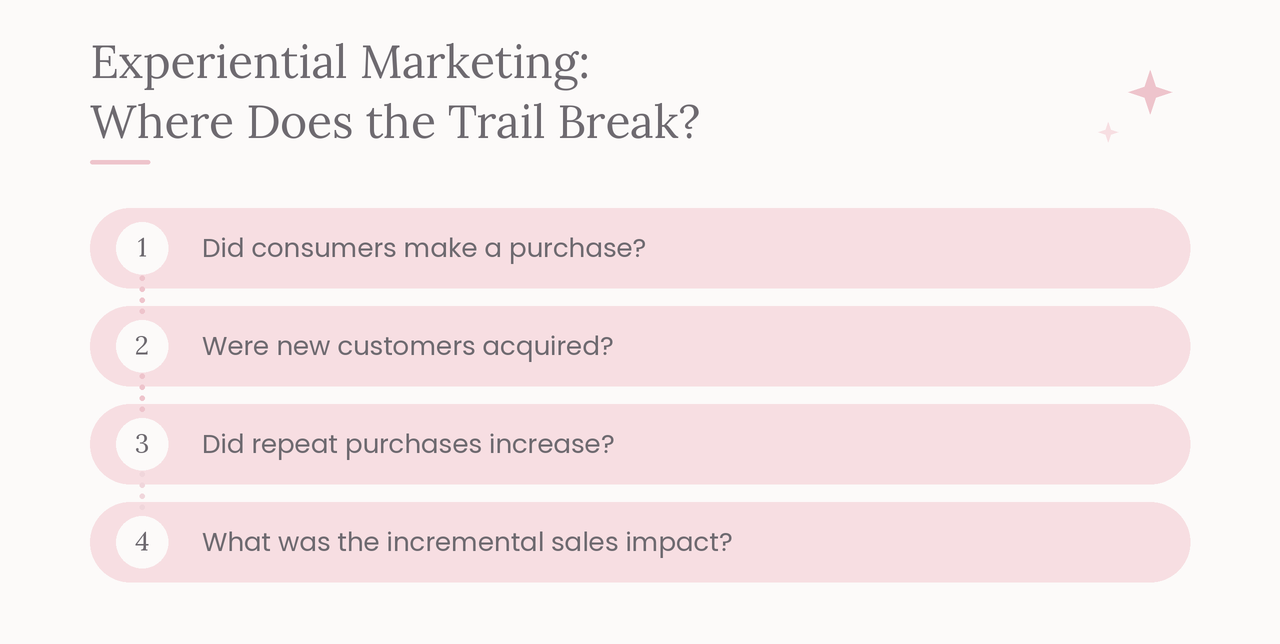
While these indicators offer a measure of consumer engagement, they do not establish how much incremental business the activation generates. Brand mentions, positive feedback and discovery can signal growing awareness, but the commercial impact is harder to determine without evidence linking participation to new customer conversions, repeat purchases or a measurable sales uplift.
An extra investment, an elusive ROI
For distributors representing international beauty brands, the decision to go for experiential marketing can involve an additional layer of commercial consideration. Sharath Sannenahalli Ramachandraiah, Director and Business Head at KATALYSST CPG Private Limited, which distributes Korean skincare brands including SKIN1004, TIRTIR, d'Alba Piedmont and Round Lab, said the company's overall marketing allocation is around 20%. The 20% figure refers to the overall marketing budget he described, not a dedicated experiential marketing allocation. “The Nykaaland investment is additional to it,” he added.
Ramachandraiah said such participation is discussed with the brands the distributor represents, with the opportunity explained before a decision is made. “It's in collaboration with the brand, it is funded by the brand also.”
But the investment still needs to be evaluated. Ramachandraiah said the company tracks online sales around the event and looks at the online visibility and content made around the brands. However, the executive was clear about the limits of attribution. “It's not ROI driven. It's mainly for brand awareness.”
Beyond the Instagram afterlife
As beauty brands invest in everything from product sampling and interactive installations to mobile activations and large-scale festivals, their definition of success extends beyond immediate sales. Executives point to customer acquisition, consumer feedback, brand mentions, organic discovery and online visibility as indicators of whether these experiences are delivering value. However, none of the executives explicitly identified a direct return on investment as an established measure of success.
For Prasad, Founder and CEO of Plum Goodness, the decision to invest comes down to whether a product warrants that level of consumer engagement. “Actually it's not about the budget. It's really about, does this product need this level of investment?”
That conviction reflects the role experiential marketing can play in helping consumers discover products, try them firsthand and build familiarity with a brand. The challenge is determining how these outcomes develop beyond the event itself. If awareness is the objective, brands need to understand whether it has increased among their intended audiences. If discovery is the goal, they need to assess whether consumers subsequently explore or purchase the product. And if content is a key outcome, its reach and continued value after the activation need to be considered. Experiential marketing can create connections that conventional advertising may struggle to replicate. The question is what those interactions deliver after the crowds disperse, the samples run out and the last Instagram post goes live.
Read more news about Marketing News, Advertising News, PR and Corporate Communication News, Digital News, People Movement News
For more updates, be socially connected with us onInstagram, LinkedIn, Twitter, Facebook, YouTube & Google News